

The most dangerous thing in your kitchen isn't the knife
I have, on more than one occasion, partially removed a piece of my own thumb. I still have all ten digits, but a couple of them have opinions about it. I'm a clumsy cook and I've got the scars to prove it.
So I take knives seriously. Everyone does. Hospitality is genuinely good at physical safety: the burny things, pointy things, slippery things by the fryer. Visible risks get respect.
Almost nobody talks about what a chef breathes.
My favourite thing to cook is tarka dahl. And the best bit, the bit that makes the whole dish, is the tarka itself. You get the oil properly hot, hotter than sensible, and you drop in all your seeds: mustard, cumin, nigella until they crack and spit and fill the kitchen with a fog of delicious aromas. Then in go the onions and spices, and you fry the bejesus out of them too.
I do this on purpose. In a small room. With the door shut, because it's winter, and with the extractor fan not turned on, because I forgot, because I'm concentrating on the seeds. Or because it’s too noisy, and I’m listening to Emily Maitliss and the news agents.
Here's the thing I didn't know or think about until recently. When you heat oil that hard, you're not just cooking it. You're aerosolising it. Ultrafine particles, polycyclic aromatic hydrocarbons, aldehydes (you can thank google for that detail, not my 30 year old A-Level in chemistry). Not the smoke you can see. The stuff you can't, that goes deep into your lungs and settles in.
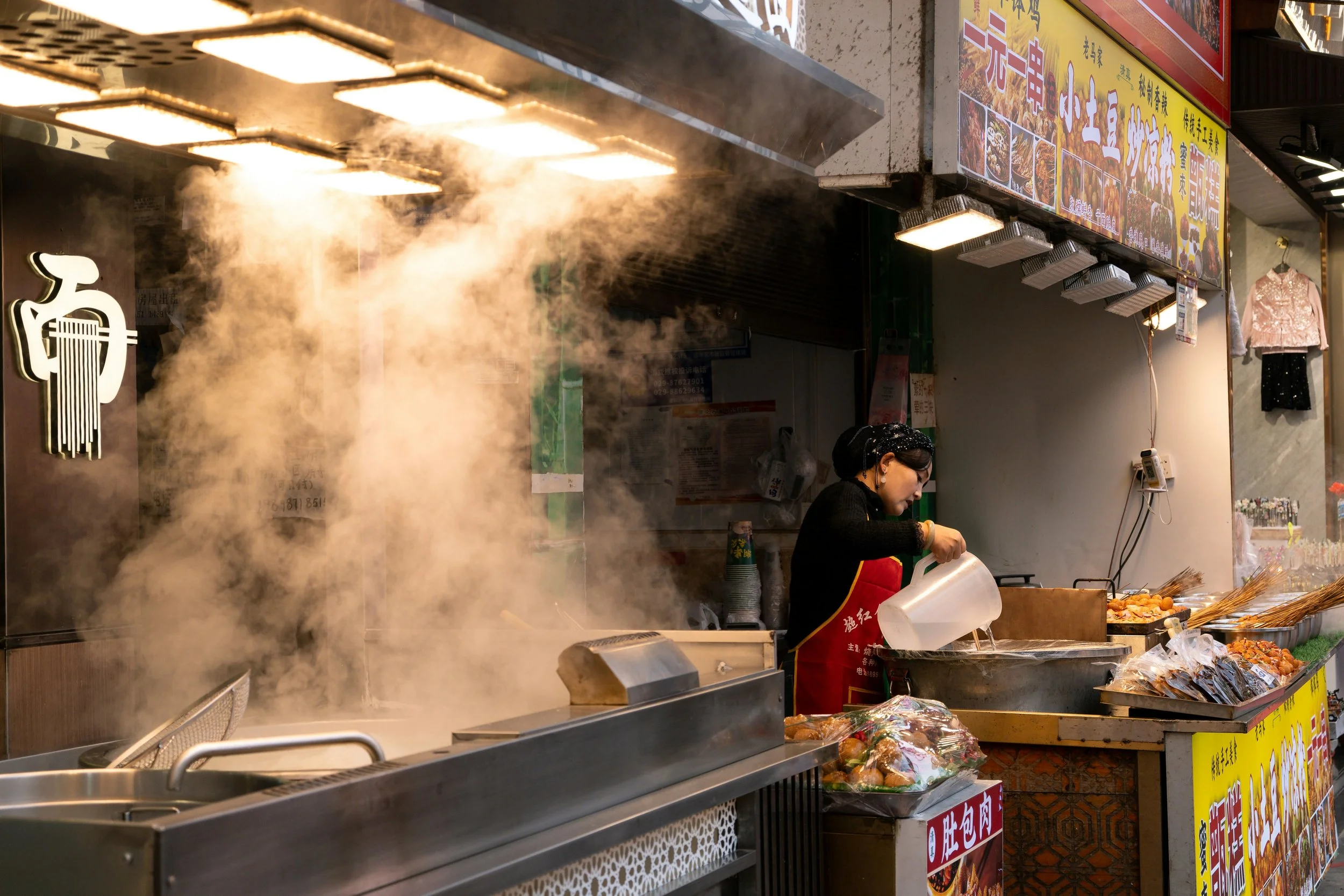
And the evidence on this has been around for decades.
In 2010, the International Agency for Research on Cancer reviewed the epidemiology and classified emissions from high-temperature frying as Group 2A: probably carcinogenic to humans (IARC Monograph 95). Four studies, four different populations, all showing increased lung cancer risk, and a dose-response relationship. More frying, more risk.
Then researchers did the obvious thing and looked at chefs. A Taiwanese study followed more than 379,000 certified chefs from 1984 onwards. The ones cooking Chinese food, which means a great deal of very hot wok work in an enclosed space, had an adjusted incidence rate ratio for cancer of 1.69 compared with chefs cooking other cuisines (Taiwan chef cohort). Same trade. Same hours on their feet. Different air.
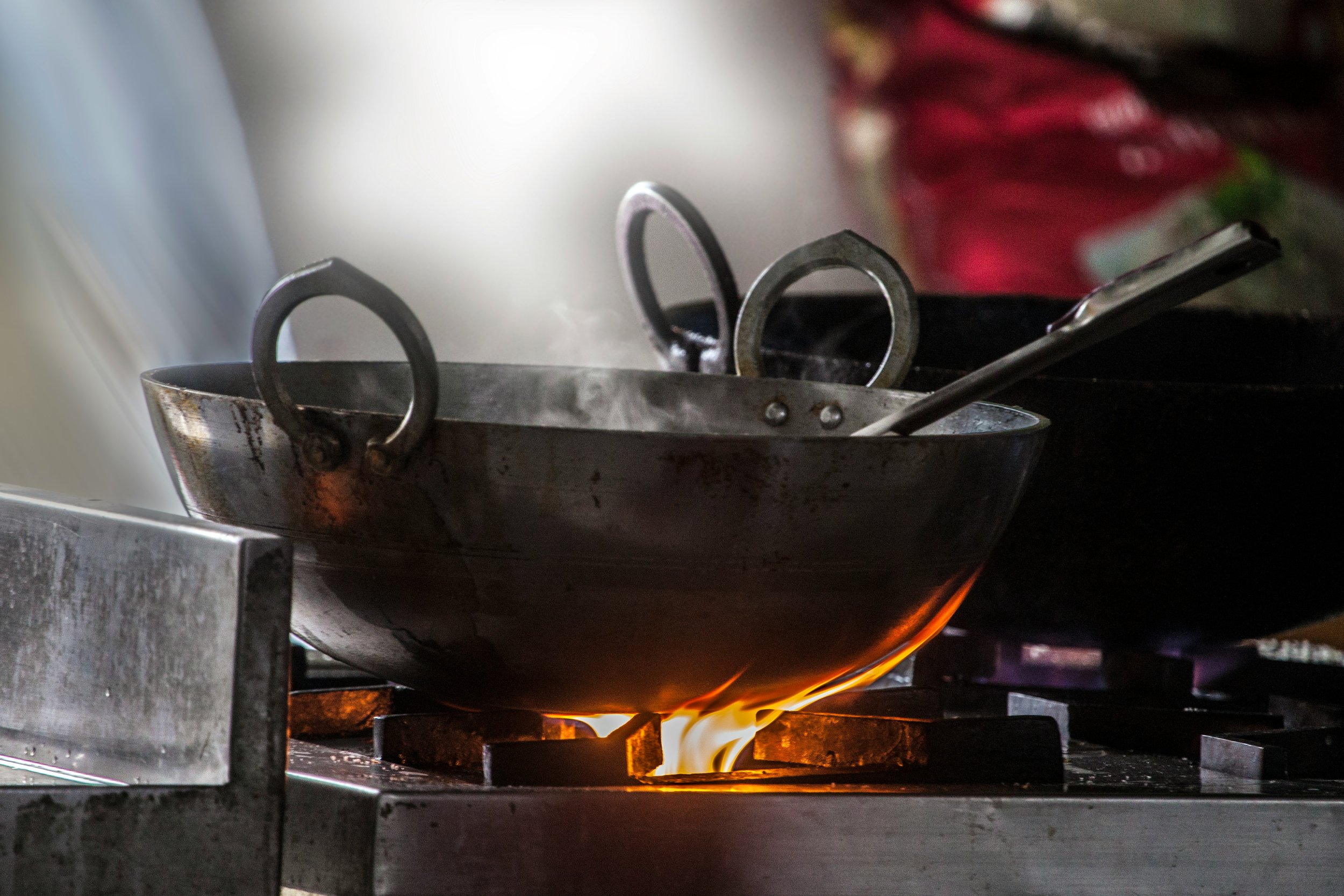
So what are the actual numbers in a kitchen? Researchers measured 18 restaurants in New York City. Median PM2.5 in the kitchens was 79.6 µg/m³, with real-time readings spiking into the thousands during service (New York restaurant study). The WHO guideline for 24-hour exposure is 15 µg/m³. A chef stands in that for a ten-hour shift, most days, for thirty years.
Now let me be fair here. The purpose of this is not to scare you.
Cancer Research UK have argued that the risk gets overplayed for Western cooking, since the headline findings come largely from Chinese and Taiwanese populations doing enormous volumes of high-temperature wok work (Cancer Research UK's view). That's a reasonable caution. Cuisine matters. A Wellington bistro is not a Taipei wok station. And my Friday dahl, however enthusiastic, is not thirty years of service.
But look at what nobody disputes.
Nobody argues the fumes are harmless. Nobody argues that 79.6 µg/m³ is fine. And nobody argues the answer is anything other than ventilation. Where chefs had working fume extraction, the risk went down.
Which is the actual point of this whole piece.
Extraction is not a thing you install once and then stop thinking about. Filters clog and they are horrible to clean! Especially with the amount of dahl I get through. Fans get switched off because they're loud, or because someone's shouting over them. A hood that shifted plenty of air in 2019 moves half as much in 2026, and nobody notices, because you cannot see PM2.5. By the time you can see it, it's smoke, and it's far too late to call it early warning.
That's what gets me. It isn't that kitchens are dangerous. It's that the one control that works, ventilation, degrades silently and nobody finds out. A chef would never run a fridge for seven years without checking the temperature. They sharpen their knifes before they get blunt and start causing accidents. But the extraction? That just runs, until it doesn't.
The kitchens that get this right treat air like they treat their cold chain. They have a number. The number tells them when something's wrong, while it's still cheap to fix.
I'll keep taking the knives seriously, obviously. My thumb insists. But the knife gives you instant, honest, extremely memorable feedback. It tells you immediately when you've made a mistake.
For air quality, we need to monitor it! Airsmart PM reads PM1, PM2.5 and PM10 alongside CO2, temperature and humidity. $315 plus GST. It won't clean your air. It'll tell you the day your extraction stopped doing its job.